The Pioneer
Motorola, once the most iconic American technology company globally with a heritage dating back to 1920s has gone through a series of ups and downs in its almost hundred years of existence. Dr. Martin Cooper invented the first cellular mobile handheld the DynaTAC 8000x which weighed 1.1 Kgs in 1973 while at Motorola, however, the most action on the cellular mobile handset front came since Motorola's demonstration of the first working cellular phone prototype based on GSM standards in 1991 almost couple of decades later. Motorola did well in the first generation cellular handset market to maintain its share against the European rivals until 1997 when it's market share peaked and the Finnish mobile phone company Nokia surpassed Motorola in 1998. The decline continued until 2004 as Japanese and Korean brands made inroads alongside European brands.
Razr era
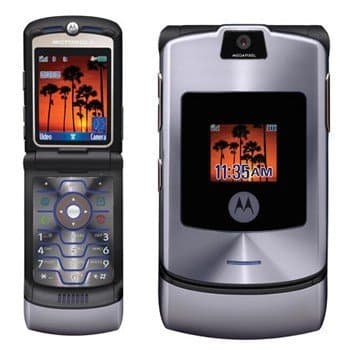
Source: Motorola
However, in 2004, Motorola launched a fashionable thin clamshell form-factor - Moto Razr phone reinvigorating the feature phone market then. The model Razr v3 with its "razor-sharp" thin design, dual-display, pocketable design helped Motorola make a comeback and grow its global market share from 14% at the start of 2004 to almost 21% by end of 2006. The original model Razr v3 went on to sell 132 million units globally since its launch over the span of the next five years and was one of the most all-time popular mobile phone models globally.
Post-Razr Era - Spinoffs & Acquisitions
Since 2006, when Motorola's performance peaked again and started losing market share, the OEM had to retrench its operations and scale to survive operationally. Over the next ten years, Motorola went through series of spinoffs, acquisitions and was finally acquired by Lenovo in 2016 to boost the Chinese vendor's "brand equity" in mobile and smart devices space to replicate the success of IBM's PC business acquisition.

Source: Counterpoint Mobile Phones Market Monitor Analysis
But since the Motorola acquisition, it has been a struggle for Lenovo to compete against vertically integrated players such as Apple, Samsung, LG and Huawei on one end and aggressive brands such as Xiaomi, OPPO, vivo on the other. Lenovo also phased out its own brand "Lenovo" focusing resources on just the "moto" brand. According to our Market Monitor tracker, Motorola's global mobile handset (smartphones + feature phones) market share at the end of Q2 2019, was 2% and within smartphones was a mere 3%. Motorola has though done well in the American continent in key big markets such as the USA, Brazil, Mexico, Colombia, Argentina. the Americas contribute to more than 85% of Motorola's shipments globally followed by India where it has seen some success with e-commerce partners such as Flipkart. However, elsewhere Moto's brand, reach and sales are almost non-existent.
What's next? A Foldable Razr Phone?
As we enter the foldable devices era, it will be interesting to see if Motorola can gain some edge leveraging its engineering heritage, building on its pioneered foldable clamshell design and the latest foldable display technologies and components available to possibly make another comeback as it did with the original Razr v3. Motorola has been working on patenting design for a foldable phone:

Source: World Intellectual Property Organization (WIPO), Application # 005908605
Motorola at its upcoming launch event on Nov 13th, 2019 is possibly launching a foldable phone as highlighted by the teaser that depicts efforts to build on its original Razr v3 form-factor. We will have to wait till next week to see if Motorola has done enough to excite the industry and consumers with another iconic design which could boost the outlook of the foldable devices which nicely coincides with the commencement of the 5G era.
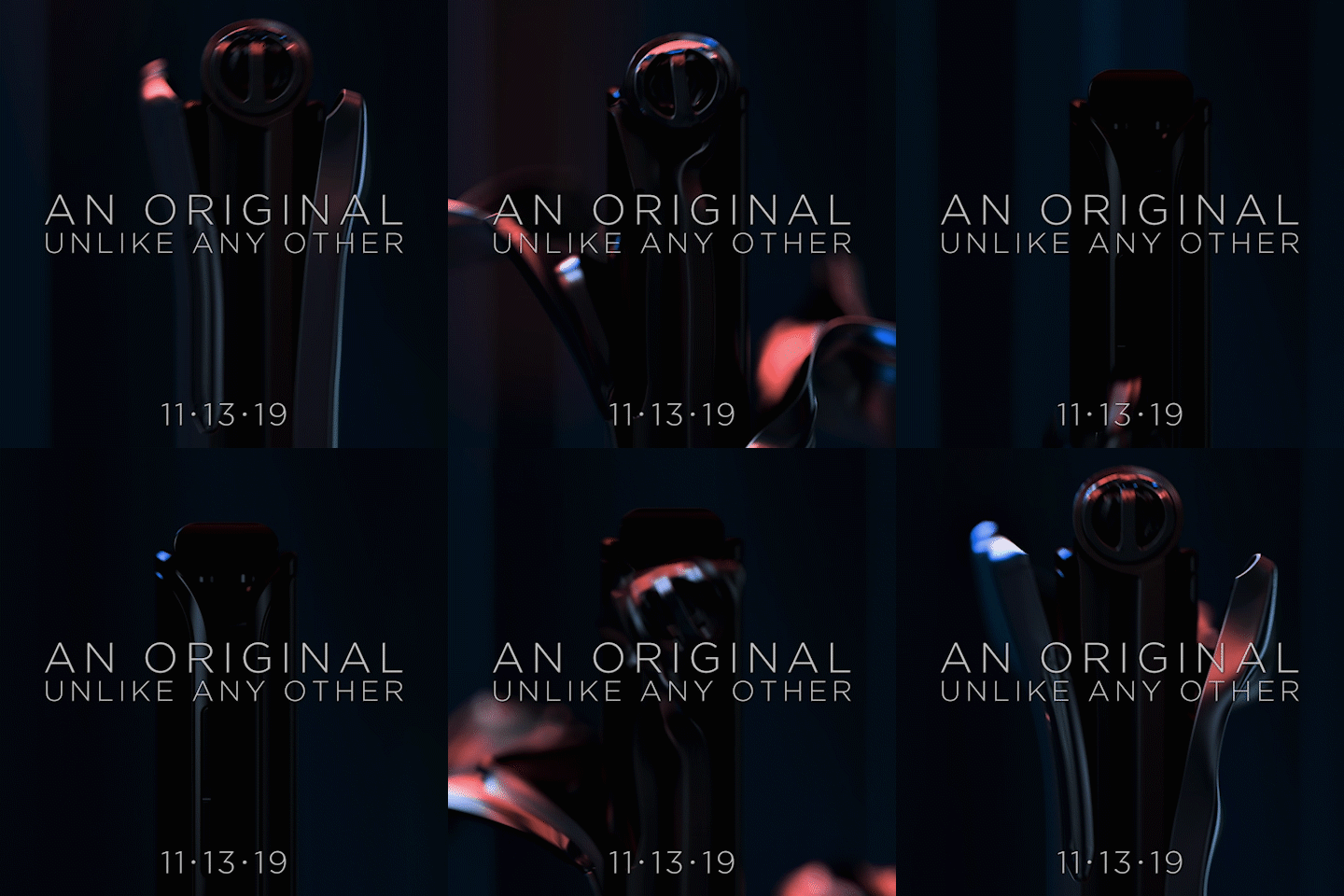
Source: Motorola
Recommendations:
Motorola with this upcoming foldable phone will have to be prudent on the design (hinge, display), pricing, positioning, and promotion to even think of a serious comeback.
Firstly, the hinge and display design will be the key to the device's success from usability, durability and yield perspective. We have already seen the challenges faced by the first-gen foldable phone design from players such as Samsung and Huawei from durability and yield perspective which will be the first hurdle for any brand to scale in terms of supply with this new form-factor. Secondly, is the cost. if Motorola, can astutely control the BoM costs and price it well to take this design to mainstream markets, it can quickly scale in terms of demand. Thirdly. positioning with respect to usability, use-cases, and novelty would be the key to differentiate and rebuild the brand equity. Finally, from a promotions perspective, Motorola already has created a significant initial buzz in social media and the fan renders and leaks have certainly helped with initial momentum. However, if Motorola has something unique and iconic up its sleeves marrying it with creative viral marketing learning from Chinese counterparts would not be tough. Further, partnering with some key app developers to leverage the device's form-factor well would be important as well. The next step would be to expand presence geographically into more lucrative markets e.g. Japan, UK, Germany, etc.
Post-Launch Analysis!
Some quick thoughts on the first impressions on what was finally announced!
The specs include
- High-tier Specs: Powered by a high-tier 4G only SoC - Qualcomm Snapdragon 710 and sporting 6GB RAM / 128GB NAND Storage
- eSIM only: This is the first smartphone to be integrating eSIM only and not a physical SIM as per the outlined specs. This should help save enough board space to enable compact design, ruggedizedness, and ease of provisioning remotely. We will have to see if Verizon Wireless locks it down to just one local profile writing or so.
- Hinge design: More details on how the hinge is engineered. Some serious engineering feat to get that hinge designed while resembling the original Razr look, feel and flip. This enables a compact fold-down design to make the form-factor more compact vs other competitive design
- Foldable Display: The main display called a s "flex View"is 6.2" plastic OLED display with a resolution of 2124x876p in a 21:9 form-factor. Motorola has done some extra coating to make it more scratch- and water-resistant. We believe the pOLEd is supplied by BOE.
- Fold: Unfolded the phone is 6.9mm thin and with fold almost 14mm. Comparatively, Samsung Galaxy Fold is 7.6mm when unfolded and 15.7mm (17.1mm on the hinge side) when folded.
- Camera: The rear camera is a 16MP Dual Pixel AF with dual-LED flash whereas the front camera is 5MP with flash. Moto has made some cool additions such as Spot color mode to pick one color to keep and other all parts of the photo can be black & white and features such as Smart Composition, Auto Smile Capture powered by on-device AI.
- Sound : The unique chin design at the bottom, allows Motorola to add a bottom-ported speaker for a superior sound and standout grill design. Motorola has cleverly included a smart packaging that doubles as a mount for the bottom-ported speaker and together can act as a smart speaker.
- Price: US$1500 price tag is some extra premium and positioning for the specs (Especially with no 5G) but justifies the design innovation, uniqueness and nostalgia factor. Further, Motorola will also miss the important holiday window as the device will be physically available in retail in January 2020. Also believe, the yield on the display and device is going to be limited through 1H 2020. Expect the price to drop (with offers) by end of Q1 2020.
Overall, Motorola has done a great job on packaging this design but the lack of 5G capability for the $1500 price tag and limited roll-out with Verizon exclusivity makes it just a move to gain mindshare rather than marketshare. Look forward to the next generations of foldable Razr next Fall 2020 to actually revive Motorola's fortunes.


